1988 BMW M3 – stroked and supercharged

Screen Shot 2013-05-14 at 11.58.23 AM

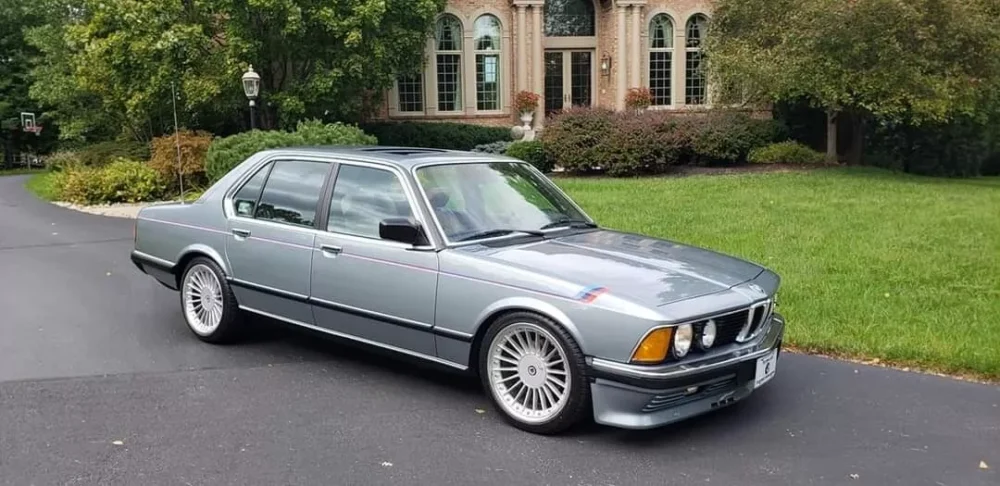
Sub-$20k E30 M3s are nearly impossible to find these days. While the ideal would be to find one completely stock and with decent mileage, the real supply lies in modified M3s. If you can find one in decent enough shape with mods you don’t hate, it could be the way to go. Today’s was subject to a minor collision resulting in a rebuilt title, but comes with goodies like a stroker kit, supercharger, and Alpina wheels. If everything checks out straight, being one two-dollar bill short of $20k could make this a fun and stunning purchase for someone trying to jump on the E30 M3 rocket ( /possible bubble).

Screen Shot 2013-05-14 at 11.58.45 AM

Year: 1988
Model: M3
Engine: Stroked 2.5l S14 supercharged inline four
Transmission: 5-speed manual
Mileage: 144k on chassis
Price: $19,998

CLICK FOR DETAILS: 1988 BMW E30 M3 on eBay

Screen Shot 2013-05-14 at 11.58.13 AM

Up for sale is my baby, 1988 BMW M3 E30! I’ve had this car for almost 7 years. Since I purchased the car, had the upgrades done, such as 2.5 liter engine with VAC Motorsport Stroker Kit. Eibach lowering kit, Koni shocks, sway bar kit by “Suspension Techniques.” The front seats have been completely redone, Alpine CD player and sound system. Factor options such as power windows and power locks, power sunroof, air conditioning, digital information center and more! The car sits on 17″ Alpina wheels and almost brand new tires. Rear spoiler wing, front bumper add on lip spoiler. Eisenmann exhaust system.

Supercharger Kit IMA throw made by RMS (hard to find). Miller War Programmable chip. When I purchased the vehicle it had a rebuilt title (due to minor accident)! So I’m selling it also as a rebuilt title vehicle.

Screen Shot 2013-05-14 at 11.58.45 AM

This seems like an M3 that has been well-loved if not fully respected; it could be a lot worse. Remove the stickers and poorly-placed Alpina emblems and you have a good looking, crazy-fast E30 M3 that would be the envy of every enthusiast passing by. Is a rebuild-titled car worth $20k? I have a feeling a year or two from now that won’t even be a question.

-NR

2008 Mercedes-Benz E63 AMG Estate

Screen Shot 2013-05-07 at 7.14.23 PM

Need to haul a bunch of stuff around at neck breaking speeds? Today is your lucky day. Love doing burnouts and getting strange looks from confused bystanders? Today is your lucky day too! The E63 AMG Estate is a car that car guys get but most others don’t. Why does a station wagon have 500+ hp and sound like a hungry lion trapped outside of a New York Deli? Because wildly fast and ridiculous wagons make the world a better place. The 2008 AMG wagon is located in my lovely city by the bay and needs a new home.

Screen Shot 2013-05-07 at 7.14.23 PM

Year: 2008
Model: E63 AMG Estate
Engine: 6.2 liter V8
Transmission: 7-Speed Automatic
Mileage: 63,949
Price: No Reserve Auction, Current bid of $32,223

Click for Details: 2008 Mercedes-Benz E63 AMG Estate on eBay

Selling this 2008 E63 Wagon for no reserve. The last bid will win the car. Please only bid if you are genuinely interested in owning this fine AMG wagon. One owner 2008 Mercedes Benz E63 wagon with 63,949 miles. Only 62 E63 wagons were produced in 2008. Super rare. It comes factory with 6.2L V8 producing a whopping 507HP/465ft-lbs and 7 speed transmission.

This is the ultimate sleeper wagon and its currently de-badged (have the original emblems) of the E63 emblem on tail gate. This wagon will give you pure enjoyment and thrill when driving this wagon. It has all the right features and great color combination. Only feature it does not have is the 3rd row seat but that means it has the spare tire option.

Car was purchased from Smythe Mercedes Benz in San Jose California on 12/2007. Meticulous dealer records with service and warranty information included with sale. All services performed at Smythe European Mercedes Benz. Folder with detailed records date and mileage in chronological order. Original window sticker, books, and keys. No accidents or damage. No pets or smoking. Clean carfax and title in hand. Many pics below.

Just installed two new rear tires this week. Front tires are still very new tread. All matching tires in factory sizes 245/40/18 front and 265/35/18 rears. Last month installed new v belt. Recent dealer inspection on 4/13/2013 with 63,731 miles. Results posted in pics below. Car is in fantastic shape!

Ordered new with the following equipment:

Iridium Silver
Black Nappa leather

Options-
Voice control
Premium pkg II
- Dvd navigation, heated and active vented seats, power rear side window shades, keyless go, Bi xenon headlamps with active illumination, head lamp washing system, cornering fog lamps.

Total MSRP $93,305.00

Hoping that this car finds a great home. The right wagon enthusiast that appreciates the best of the best wagons on the road! Seller reserves right to cancel auction early. Email for more info.

Screen Shot 2013-05-07 at 7.14.23 PM

I believe there were 153 E63 wagons produced and only 62 of those left the factory in 2008 making this a pretty rare breed of AMG. This would be the perfect SF hoonmobile. If I got my hands on this wagon San Francisco could forget about their fog issue as I would be leaving enough tire smoke at every street intersection to keep the city in the clouds year round. The M156 NA 6.2 is the best sounding V8 Mercedes has ever built and was originally developed for DTM racing. Let’s hope this wagon goes to a good owner who isn’t afraid to let the lion out and allow us all to enjoy the sweet sounds from Großaspach.

-Ben

1969 Mercedes-Benz 280SL

280SLMercedesZF57_zps95bab7c4

Mercedes has a long track record of introducing striking vehicles that combine class with performance; however, in the case of the W113 Pagoda, finding one with a stick-shift with which to stir the 2.8 litre six’s 170 b.h.p. is a bit of a needle in a haystack. Like most creations from Stuttgart, the car was packed with advanced features such as aluminum body panels and an optional removable hard top. Some, however, were extra special, coming with a fifth gear instead of the standard four.

This example is one of those cars, and more significantly, one of only 882 to feature the optional ZF 5-speed. With the added bonus of operational A/C, original body panels still intact, and new carpeting with matching ivory white hardtop, this 280SL is hard to find fault with. Although no mention is offered of its mechanical condition, we can only assume its impressive cosmetics and rare options support a rich history of passionate owners.

280SLMercedesZF62_zpsca1cb3db

Year: 1969
Model: 280SL
Engine: 2.8 liter inline six
Transmission: 5-Speed Manual
Mileage: 94,998
Price: $59,000

Click for Details: 1969 Mercedes-Benz 280SL on eBay

280SLMercedesZF16_zpsa8b8010e

1969 MERCEDES BENZ
280SL – W113
5 Speed ZF Transmission with A/C

This is an original 280SL with 95,000 original miles.
Purchased from a Mercedes Benz dealership, this car has the very rare ZF transmission 5 speed.
Original Fenders with notched and factory weld.
Original floors with no rust anywhere on the car.
The original color was DB181 light beige, now done in a DB50 white.
Complete leather interior.
New carpet.
New hard top.
Soft top is in very good condition.
Chrome is very nice.
Contact us for more info.

We ship around the world. ($1,300 to Rotterdam, $2,500 to Japan)

This car is on consignment and we reserve the right to end the auction at anytime. The deposit is not refundable, unless agreed with the owner of the vehicle.

Payment in full is due within 5 days after the auction. Please contact us for our company policy and agreement.

Clear title.

280SLMercedesZF43_zps594e298e

These cars are desirable in any form, but the addition of ZF box makes this one even more mouth-watering. Mercedes’ roadsters are well known for their propensity to rise in value, so the combination of seemingly excellent condition with one of the rarest options ever offered in the Pagoda series gives this example a strong pedigree. Say, what’s the Powerball jackpot up to?

1973 BMW 3.0 CS

30cs1

The BMW 3.0 CS is equal parts polarizing and obvious, mostly because it’s exactly how you would expect BMW to nail a game-changing design like the CS coupe. In addition to an expansive greenhouse and iconic front wings flanking the BMW kidney grills and dual-round headlamps, the CS also further strengthened BMW’s reputation as a motorsports powerhouse, as the offspring of the marque’s iconic New Class lineup spawned the famous 3.0 CSL Batmobile.

The 1973 3.0 CS featured here is no Batmobile, but it is a cherry example of what appears to be a properly-restored coupe. With an engine rebuild completed, new front wings and a restored shell, there’s not much more to do than enjoy it while doing your best Hans Stuck impression.

30cs2

Year: 1973
Model: 3.0 CS
Engine: 3.0 liter inline six
Transmission: 4-Speed Manual
Mileage: 75,000
Price: No reserve auction

Click for Details: 1973 BMW 3.0 CS on eBay

30cs4

Features of this spectacular car include:

* Verona Red exterior
* Black leather interior
* Body restored – new front fenders
* Engine rebuilt (Tom Kelly) 5,000 miles ago
* 4-speed manual transmission
* Original Becker radio
* Electric sunroof and windows
* Air-conditioning
* Petronix ignition
* 2-row core radiator
* CSL steering wheel
* Interior is excellent – leather & wood
* Alpine wheels 16 x 7 & 8
* Webber carbs 32/36
* All chrome in excellent condition
* Owners manual and restoration receipts
* Original wheels and Zenith carbs included

30cs5

Although there are some deviations from its original form, most changes to the 3.0 CS are forgivable, such as the addition of Alpina wheels and Weber carbs. It’s always encouraging to see an owner alter stock configuration for the few options where the aftermarket did things better. It seems like everything else breathed on by BMW’s motorsports engineers, the investment potential of this car is high.

-Jeff

1974 2002tii Turbo

Screen Shot 2013-05-14 at 10.38.15 AM

No, folks, that is not model confusion in the title. Today’s 2002 comes as an interesting project from a BMW fabricator/restorer/tuner that was underwhelmed upon driving the mythical BMW 2002 Turbo. Seeking a more linear powerband and more accessible price, the creator took a recently-rebuilt 2002tii, strengthened the top end more, and added a clean turbo set up. Matching the induction are the ever-sexy 2002 Turbo fender flares and spoilers, albeit with the front lip shaved back to be nearly flush with the grill. I happen to like the cattle-guard effect of the standard lip (I own a US E28, so big bumpers aren’t a problem for me), but it’s hard to argue with the clean black on black aesthetic and perfect open-lug Alpina wheels. It all comes together as a more useable and holistic package than a real 2002 Turbo, but all that work has pushed the price to split the difference between a tii and a Turbo, asking a heady $38k. Even so, there are a lot of reasons to want this special bulldog over the rare Turbo.

Screen Shot 2013-05-14 at 10.37.37 AM

Year: 1974
Model: 2002tii
Engine: 2.0l M10 with turbocharger
Transmission: 5-speed manual
Mileage: 10,000 on rebuild
Price: $38,000

CLICK FOR DETAILS: 1974 BMW 2002tii Turbocharged on eBay

Screen Shot 2013-05-14 at 10.37.44 AM

One of the better descriptions ever courtesy of a Bimmer Magazine feature on the car:

Take Two
Disappointed with the performance of the 2002 Turbo — and put off by its price — Mano Agulian decided to build a car that would be better and cheaper than the 1973 original.

By Zachary Mayne Photography by Zachary Mayne

Released in 1973, the original 2002 Turbo was a groundbreaking car for BMW…and for the automotive world at large. Preceding the equally revolutionary Porsche 930 Turbo by some two years, the 2002 Turbo took a giant step toward legitimizing the use of forced induction on production car engines. It may have taken BMW four more decades to fully embrace this technology, but it’s now the company’s preferred method for extracting the kind of high horsepower and optimal fuel economy that the market expects.

The newest BMWs, however, render their turbochargers scarcely detectable. There’s none of the “turbo lag” that plagued earlier cars like the old 2002 Turbo, whose power delivery was so peaky it resembled a two-stroke motorcycle engine. When the gas pedal was floored, the driver waited…and waited…then whoosh! As the tach reached 4,000 or so rpm, the KKK turbocharger spooled up with sudden vigor and wild acceleration followed.

Or so the legend has it. When new, the original 2002 Turbo made 170 horsepower at 5,800 rpm and 181 lb-ft of torque at 4,000 rpm—quite a lot on paper from a 2.0-liter four, but not enough to impress Southern California BMW enthusiast Mano Agulian when he finally got to drive one of these sought-after cars.

“I was very disappointed,” he says of his first experience with an ’02 Turbo. “It didn’t have the power that I was expecting.”

Agulian still liked the concept of a turbocharged ’02, however, so he decided to build a Turbo replica that would improve upon the original, updating nearly every aspect of the car for more performance and reliability. At the same time, he wanted to prove that he could do so without spending the huge amount of money that original 2002 Turbos are now commanding. (2002ad lists two for sale as this issue goes to press: one for $43,000 and another for $64,000.)

Manofied and turbofied

As the founder of Groma Race Fabrication of Duarte, California as well as a new venture, Manofied, which will specialize in tuning and maintaining classic BMWs, Agulian has the resources, knowledge and facilities to build the turbo of his dreams. His shop regularly turns out vintage and modern BMWs that have been improved—or “Manofied,” as he puts it—to impressive levels of performance.

Agulian started the project with a tired but solid square-taillight 2002 tii that a friend drove up to his shop one day. At the time, Agulian was nearly finished with the restoration of a round-taillight tii, but he was having a hard time wrapping his head around doing all that work to end up with a car that was basically stock.

The square-headlight tii, on the other hand, seemed like the perfect base for his Turbo 2002 project, so he traded the roundie for it and went to work. The tii’s M10 motor had been recently rebuilt, so Agulian simply removed the head and refurbished it with heavy-duty valve springs,ARP head studs and a thicker Cometic head gasket to ensure that the seal between the head and the block could withstand the rigors of forced induction. The thicker head gasket lowered the compression ratio to around 9.0:1, notes Agulian, down a bit from the tii’s 9.5:1 but still much higher than the 2002 Turbo’s 6.9:1.

Comp Turbo Technology in San Dimas provided a custom hybrid turbo for the project. The housing is actually a bit smaller than the original 2002 Turbo’s KKK unit, increasing access in the engine bay and making the overall conversion tidier. The turbo is mounted to the side and at the top of the engine bay, rather than down low by the exhaust as on the original Turbo. Not only does this allow for easier access, it also looks better, since the turbo is easily visible when the hood is opened. Inside the housing, Comp installed a special compressor wheel that is designed to produce progressive boost rather than behave like an on/off switch.

The stock tii exhaust manifold was retained, though here it delivers exhaust gases to the turbo through custom piping. Spent gases exit via a 2.5-inch, mandrel-bent stainless steel exhaust system that uses a resonator in the midsection and a muffler at the end, both from Magnaflow. Agulian wanted to keep the setup relatively simple, particularly from a maintenance and reliability point of view. The tii’s Kugelsfischer mechanical fuel injection was adjusted to provide additional fuel pressure but was otherwise left stock with the exception of its cold start injector, which Agulian replaced with a 750-lb Bosch fuel injector.

He then enlisted Mark Amarandos at Split Second to install and program a controller that uses vacuum and engine speed readings to determine how much fuel the engine needs, in particular adding more fuel at full throttle. Agulian says that Amarandos’ work was the final piece of the puzzle that yielded a smooth-running engine that produces consistent power throughout the rev range. A larger Ireland Engineering aluminum radiator replaced the stock radiator, and Ireland also supplied an engine oil cooler as well as an intercooler with silicone hoses to keep intake charge temperatures at manageable levels.

Tested on the dyno with the turbo running a relatively conservative 7.0 lbs. of boost, the 2.0-liter M10 four produced 155 rear-wheel horsepower and 167 lb-ft of torque. That’s roughly 11 hp and 13 lb-ft more than the original ’02 Turbo, assuming a 15% loss through the drivetrain. The 2002 now delivers that power through a close-ratio five-speed transmission from a 320is and a custom-built 4.10:1 limited slip differential that uses E36 gears with 40% lockup inside a 320i housing.

Lower and stiffer

Agulian had addressed the lack of usable power he’d experienced in the original 2002 Turbo, but that hadn’t been his only complaint. As a builder of cars that are as much at home on a race track as they are prowling the boulevard, he didn’t feel his new project’s handling was up to par even though its suspension had been recently refreshed.

To address that deficiency, he welded and boxed the lower A-arms and front subframe for added rigidity, then swapped the struts and springs for Groma’s custom coilovers. These use 325-lb. springs from Ireland Engineering around Bilstein Sport dampers mounted inside shortened strut housings, which lowers the BMW’s center of gravity while maintaining full suspension travel. He also installed firmer urethane bushings wherever possible, along with adjustable upper camber plates and a strut tower brace. An adjustable 22mm Ireland Engineering anti-roll bar rounds out the front suspension changes, here with the mounting points relocated to increase the bar’s rigidity.

At the rear axle, adjustable camber plates were welded onto the subframe; to these mount Bilstein Sport shocks and Ireland Engineering lowering springs. An adjustable 22mm anti-roll bar and urethane bushings complete the rear suspension mods. Where the original 2002 Turbo came with steel wheels or optional 14-inch alloys, Agulian went one better, installing a set of 15-inch Alpina-style alloys that measure 8.0 inches wide at all four corners and fill the wheel arches with 225/50-15 Kumho Ecsta tires. Behind the wheels, the brake system is comprised of E12 5 Series calipers clamping Volvo rotors up front and drum brakes sourced from an E21 3 Series at the rear.

OEM Turbo flares were ordered from BMW, as were the front and rear spoilers. The front spoiler, however, has been trimmed and moved back about 1.25 inches for a more integrated appearance, a subtle change that improves the BMW’s looks. Deleting the side markers and chrome trim further cleaned up the 2002’s exterior, which Agulian had resprayed in its factory-original Black, a somewhat rare color from the days of “safety colors” like Golf yellow and Inka orange.

Better handling and just enough power

When Agulian hands over the keys for a test drive, I climb into an interior that has also received a thorough going-over, with new door and rear panels, carpeting and headliner. A pair of reupholstered Recaros from a 320is provide a comfortable, secure position from which to drive, and a three-spoke, period-correct sport steering wheel frames the 2002 gauge cluster with its legible, easy-to-read dials. Otherwise, a boost gauge mounted discreetly in the center console is the only tip-off that this isn’t a normal 2002.

When I turn the key, the engine fires with a raspy burble through the Magnaflow muffler. At lower rpm, the BMW feels pretty much like a stock tii, with a nice wedge of torque from the eager engine propelling the car forward. As the tach needle arcs toward and then past 4,000 rpm, however, everything changes. The hybrid turbo comes on boost, and acceleration ramps up considerably. It’s not a sudden burst of power, but you can definitely feel it.

While the turbo makes itself known at around the same engine speed as an original 2002 Turbo, the smoother, more progressive power delivery of Agulian’s car makes everything feel better-sorted. And because it’s running relatively low boost pressure, the motor feels nicely understressed, encouraging me to wring it out to redline as often as I find enough straight road. While a full bar of boost would likely add another 30 or so horsepower, the performance of the car as it is feels close to that of an original Turbo…but better, just as Agulian intended.

Straight-line speed holds its own appeal, but this ’02 wasn’t built to be a drag racer. Instead, it was designed as a well-rounded canyon carver, and indeed the BMW sticks like a the proverbial leech through a series of curves, with impressive mechanical grip considering the relatively small 225-series tires fitted to each wheel. The modified suspension and perfect alignment result in an extremely nimble little coupe. Some drivers might find the stiffer setup a turn-off, but the firm ride feels like a good match for the turbocharged power on tap. Add to that the close-ratio gearing and you have a sure-fire recipe for big fun. “I wanted to build a car similar to what someone would have built with a 2002 Turbo back in the ‘70s,” says Agulian.

And that’s exactly what he’s done, crafting a modern take on a retro tuner car. In avoiding the temptation to crank up the boost for maximum horsepower and instead constraining the project to extract more refined performance, Agulian has created a well-balanced turbocharged ’02. Starting with the basic ingredients from BMW’s 1973 concept, he’s polished them into a far more driveable package, one that’s very much like the original, only better.

Screen Shot 2013-05-14 at 10.37.26 AM

Hard to find many faults on this 2002 other than a high price, but it seems the craftsmanship and overall package could make it worth it to the right enthusiast.

-NR

Related Posts with Thumbnails