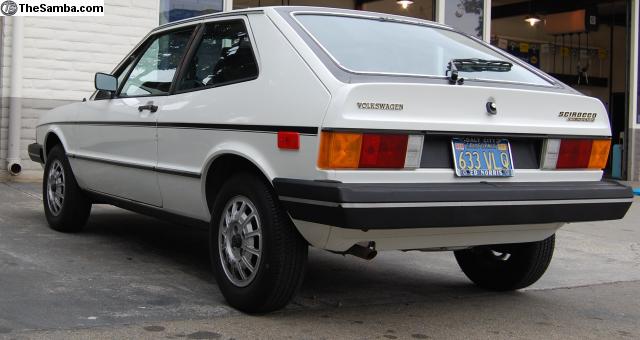
Just because you want to partake in Coupe Week doesn’t mean that you have to have the deepest pockets. For a modest investment, you can get top-notch designer styling mated to a reliable and economical engine that’s still fun to drive. That’s certainly what Volkswagen sought to achieve with the introduction of its Giugiaro-styled Scirocco. While based upon the pedestrian mechanicals of the sibling Golf/Rabbit, the Scirocco capitalized on a sportier look but was backed up by a substantial racing program undertaken by Volkswagen to promote the car. Despite good looks and a devoted following though, the Scirocco unfortunately has fallen a victim to time, the tin worm and low residual value, meaning few remain in pristine shape unlike the more expensive coupes from Stuttgart and Munich. So it was a special treat when two of our readers sent in dueling 1978 and 1977 Sciroccos this week; one original and one rebuilt. Which is the winner?
German Cars For Sale Blog Posts
I think it’s fair to say that there are quite a few of our readership that came of age in the 1980s, and the cars from that era hold a special appreciation in our minds; this author included. As we work our way through our celebration of “Coupe Week”, I went bank into my memory banks a bit. Growing up flipping through car magazines every month, I studied and memorized the horsepower figures, the 0-60 times and scrutinized the driving impressions of every single car, but there were some that caught my attention. Admittedly, in the early 1980s I had a predisposition to the Porsche 928. It looked so futuristic, and with its big aluminum V8 the performance figures seemed otherworldly to someone who grew up with Toyota Tercels and learned to drive on a early ’60s Beetle with no clutch. But towards the late 1980s, a car came to my attention that I had largely ignored up to that point; the E24 BMW. Sure, they were good looking 2-doors, but to a young man power was everything and the 928 was top trump. But then my father sold his RT1100 BMW motorcycle and bought something the family could enjoy; a 1982 633CSi. My appreciation for the BMW instantly grew. The long hood and delicate A and C pillars were a symphony of design; the sharply angled nose and BBS Mahle wheels hinted at a connection to motorsports. Inside, I still remember the smell of the luxurious leather and the sound of the M30 heading its way up the tach. Solidly in “Camp 6” now, my new favorite car was the fastest version of the E24 that was available to U.S. customers – the M6.
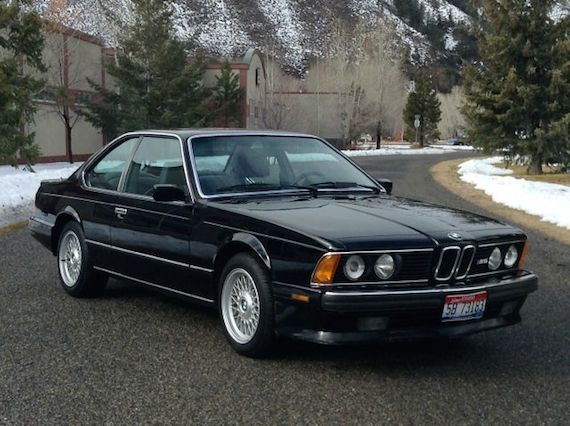
Later on, my father’s priorities changed slightly and heading to the track more, he opted to get into a 1988 BMW M5. But as much as I respected and liked that car, the M6 still had my fascination. I still remember the first time I got to drive one; I detailed the car for a friend of the family. It was not my car to drive with reckless abandon, but still I was able to revel in the growl of the S38, the directness of the steering, the way the transmission seemed to perfectly slot into each gear. It was driving bliss and I felt invincible. Unfortunately, at that time M6s commanded a strong premium over the M5 and M3, and all were far outside of my income bracket. Fast forward to today, and the M6 has become perhaps the best performance bargain from BMW in the 1980s; find a good example, and they’re sure not to disappoint still:
Click for details: 1988 BMW 635CSi at Sun Valley Auto Club
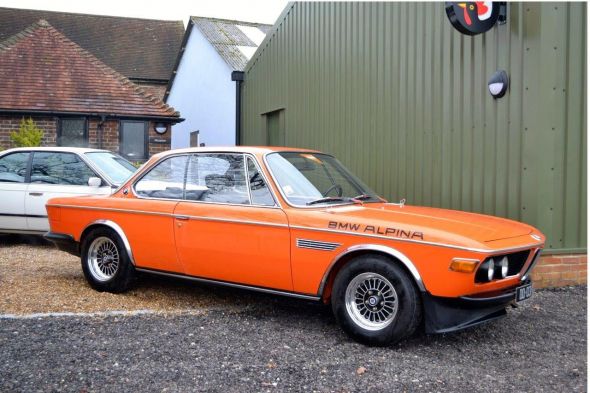
5 CommentsThey say imitation is the most sincere form of flattery, and when it comes to Alpina cars there certainly have been a lot of enthusiasts who are eager to copy the legends. Part of that is the great look that Alpina achieved, but also worth considering that Alpina models – especially early ones – command a premium that rivals some of the most exclusive models put out by the factory. Today, then, in honor of Coupe Week I have two E9 models. The first is a real-deal and rare 3.0CSL, but even then a special CSL; this one is an early carburetor model which was modified in period by Alpina to B2S spec. I then have an end-of-run U.S. spec 3.0CS that tries to imitate that look. These two cars obviously aren’t in contention with each other – but is the imitation good enough to warrant looking at?
CLICK FOR DETAILS: BMW 3.0 CSL Alpina B2S on classicheros.co.uk
4 CommentsI am not old enough to know what sort of excitement the 911S brought on when it was first released. With horsepower ranging from 160 to 190 and only around 2300 lbs to move the 911S remains a good performer even by modern standards, but nearly 50 years ago I can imagine that this sort of performance, especially in a relatively small package, would have come as quite the revelation to the motoring world. For those seeking the ultimate performance Porsche the 911S followed the tried and true method of combining more power with fewer luxuries. Following its redesign in 1974 it would be quite a while before the S returned as a top of the line performer, which has made these early models some of the most highly desirable throughout the 911 range with excellent examples approaching $200K. The car we see here is a restored Silver Metallic 1970 Porsche 911S with a reported 74,915 miles on it.
CLICK FOR DETAILS: 1970 Porsche 911S on eBay
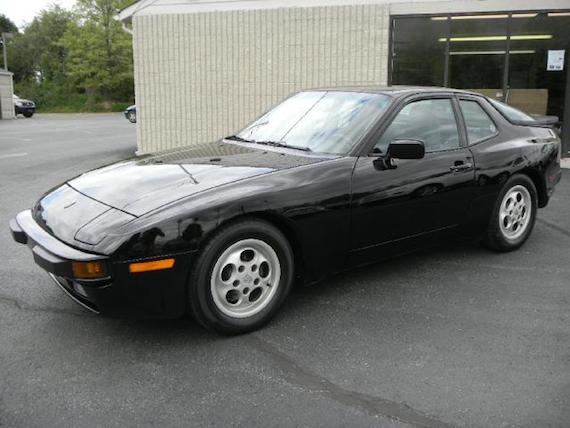
1 CommentThe 944 is one of those sports cars that is prime for engine swaps, as Carter exhibited yesterday with the 944 he found with an LS3 slotted under the hood. With one of the best balanced chassis to come out of the eighties, the 944 has become a darling of the track day set and of spirited motorists alike. With exception of the Turbo models, most of the range has stayed relatively affordable, even if it is a low mileage minter that you might stumble upon. This 1989 944 for sale in Pennsylvania has covered just over 50,000 miles. There’s not much of a description from the seller, but it appears there are some records accompanying it and it looks like a minter from the pictures.