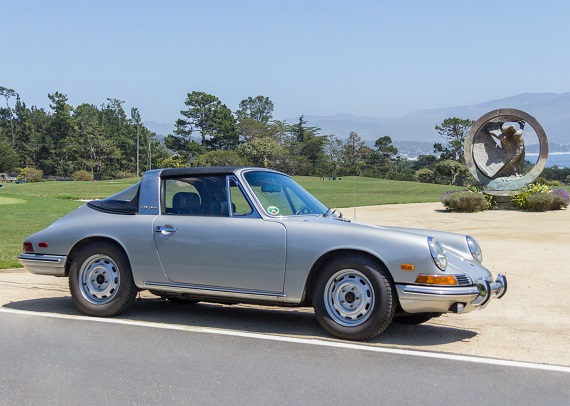
The peculiarity of the Soft-window Targa provides us a window into the way innovative designs and attempts to adapt can end up as short diversions that ultimately fail. Very few of these cars were ever made and fewer still exist today. Out of some concern for the continued viability of the convertible because of increasingly stringent safety regulations, Porsche engineered some Targa versions of the 911 and 912 with an attached roll-hoop and folding rear window, hence “soft-window”. With its combination of folding rear window and removable top these cars provided multiple ways to enjoy one’s open-top drive, yet it was always going to be more fussy to deal with than either a hard-window Targa or a Cabriolet. After a few years of production, the Targa was reverted exclusively to the hard-window version and the Soft-window exists as sort of an interesting anomaly. Ultimately, it seems these soft-windows showcase some of the difficulty the Targa has enjoyed more generally. Still, they were an interesting attempt at a solution to potential problems, even if those problems never materialized to the degree Porsche expected. The example we have here is a 1968 Porsche 912 Soft-window Targa, located in California, with 109,125 miles on it.
German Cars For Sale Blog Posts
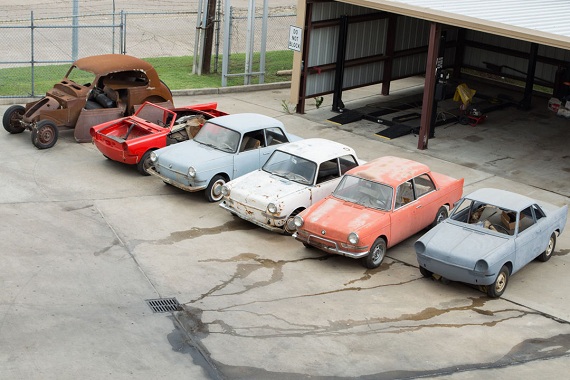
When considering a restoration project, many things factor into one’s decision. You need to first pick a model that you find particularly interesting or intriguing. For me, that includes choosing something a little outside the mainstream interests. It’s why I prefer the Audi V8 to the S4/S6, for example. It helps if it’s something that you can afford, as well – for example, you could decide to restore a very early 356 Porsche rather than a 911, but if you can’t afford to buy one it’s no good. Then you need to weigh parts availability and cost along with your restoration goals; will this be a driver, a survivor or a 100 point show car? The costs vary for each, as will the amount of detail work involved. For me, while I love to see pristine 100 point show cars, I prefer something that can be driven to the show and home. My Audi, for example, is certainly not pristine – but it also doubles as a track car, and with nearly a quarter million miles on the clock I’m proud of some of its battle scars even if they make me sigh from time to time. So, when something very unique pops up that has potential to be different, special and really stand out from the crowd, I take notice. The 2002ti turbo from Monday is a perfect example of this; a car that needs a tremendous amount of restoration but it really different than everything else out there. In that vein, here’s a collection of the rare, rear-engined BMW 700s in various configurations and states along with a WW2-era 321 chassis. Why limit yourself to only one project when you could have six?
CLICK FOR DETAILS: BMW 700 Collection on eBay
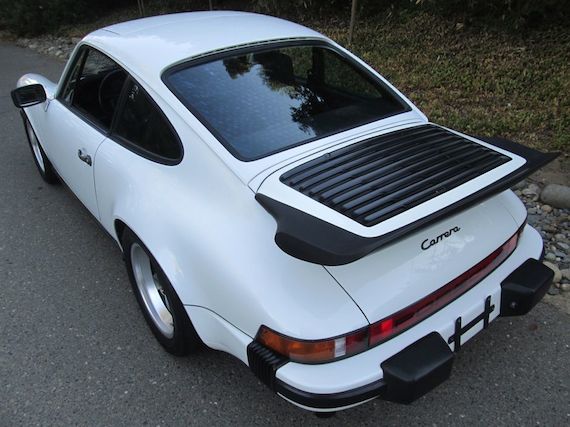
3 CommentsAs the 911 turned 20 years old in the mid-1980s, Porsche would unleash what many consider to be the last true link to the original 911 before the smoother styling of the 964 and 993 took hold: the 3.2 Carrera. This model would carry through until the dawn of the 1990s through a number of iterations. But for me, there’s just nothing better than the classic Carrera coupe. This first year Grand Prix White example for sale in California is a well-documented car, with a history intertwined with the well-known dealership, Vasek Polack Porsche.
CLICK FOR DETAILS: 1984 Porsche 911 Carrera on eBay
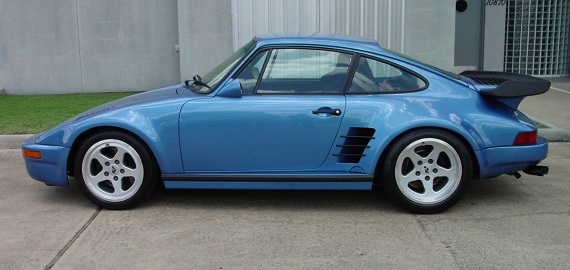
1 CommentGenerally, when someone says that the price of a car has dropped $10,000 it’s a fire sale. For example, I’ve never bought a car for more than $10,000! But when you’re talking a rare, one of one Ruf BTR Lightweight, a $10,000 price drop means that the asking price is still a staggering $248,500. While this will remain eye candy to nearly everyone who reads this, I still thought it was worth a second look!
CLICK FOR DETAILS: 1987 Ruf BTR Lightweight on eBay
The below post originally appeared on our site July 1, 2014:
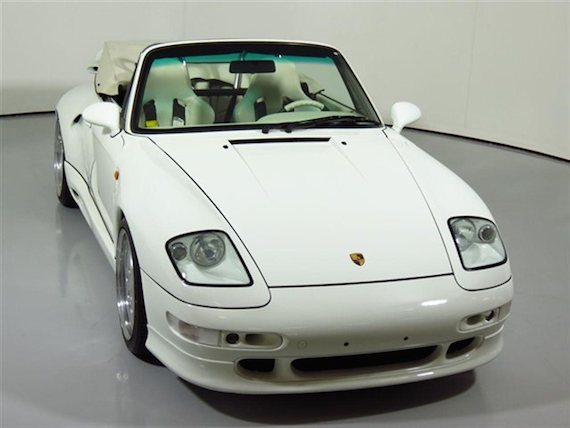
1 CommentIn the world of Porsche tuners, Gemballa is one of the wilder companies. Starting out in 1981, Uwe Gemballa’s first creation was the Avalanche, based on the 911 3.2 Slantnose. Wider fenders, side strakes akin to what was seen on the Ferrari Testarossa and a host of interior upgrades were the order of the day. The wild excess of the 1980s led to a bit more subtle aftermarket kits in the 1990s and greater performance. For a time, a 600 bhp Gemballa 911 held a lap record at the Nürburgring before being surpassed by a Carrera GT. The company’s fortunes took a sad turn in 2010. Uwe Gemballa suddenly went missing in February of that year, only to be found murdered several months later. The CEO, Andreas Schwarz, along with an investor was able to buy the brand rights and in August 2010 Gemballa GmbH was formed.
The car we see here for sale in Phoenix, Arizona is a 993-based Turbo Cabriolet. After the 3.3 liter Turbo Cabriolet of the 1980s, Porsche would never again offer an air-cooled Turbo Cabriolet. So what should have been a no brainer in the product portfolio turns out to be rather special in this case. It’s an interesting mix of 1980s styling cues with more current 911 underpinnings.