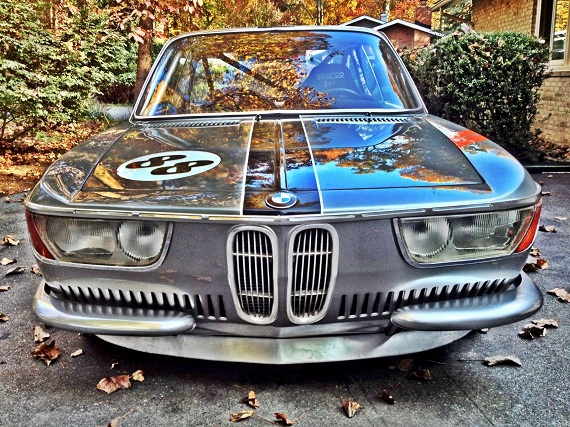
While BMW was a well-known name throughout Germany in the 1960s thanks to their prolific motorcycle history and pre-War exploits in the Mille Miglia and other sports car races with the 328, outside of Germany they remained fairly unknown in the 1960s. Indeed, in the late 1950s or early 1960s, if you asked someone to identify where the kidney grills belonged in Britain, they’d probably point you towards the BMW-derived Bristols of the day – straight copies of some of the first post-war BMWs, right down to the grill. So in the 1960s and 1970s, BMW went racing to try to spread the reputation of their engineering out of motorcycles or perhaps some veiled World War airplane references with their “New Class” sedans. It was independent tuners like Schnitzer and Alpina that first really started to get the small sedans noticed in Touring classes. While the large coupe based upon the New Class design wasn’t raced much in its day – efforts instead focusing on the smaller, lighter and similarly powered sedans – it’s none-the-less exciting to see a 2000CS that has been modified in the style of the period racers:
German Cars For Sale Blog Posts
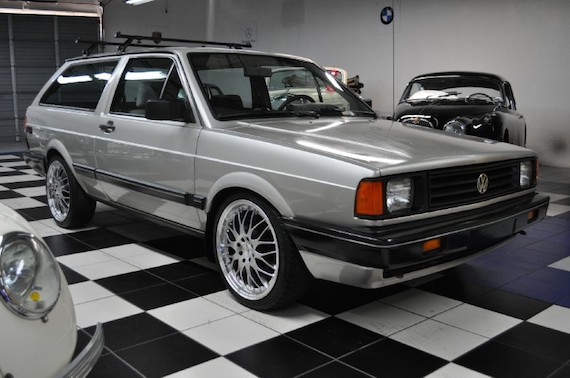
One of my favorite Volkswagens from the 1980s is one that you rarely see on the roads anymore. The Fox Wagon. This was an oddity in the US lineup for only a couple of years, a compact, two-door shooting brake of an estate car that was courtesy of Volkswagen of Brazil, where it was sold as the Gol. These were a bit of a reprisal of the idea of the “people’s car†for VW, a basic, no frills model offering German engineering at a discount. While the wagon was discontinued after the 1990 model year, the model range would get a refresh, carrying on with the two and four door sedan models through 1993. This 1988 Wagon for sale in Florida is a chance to sample an almost forgotten model in recent Volkswagen memory.
CLICK FOR DETAILS: 1988 Volkswagen Fox GL Wagon on eBay
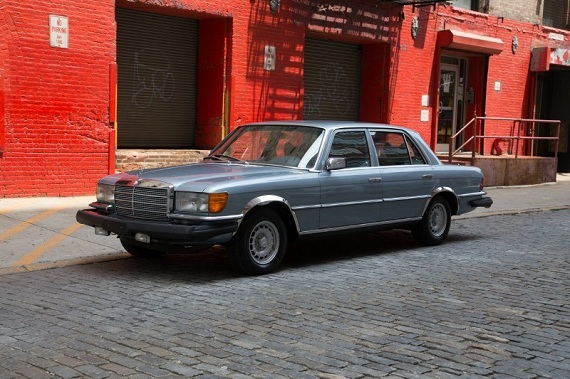
2 CommentsWhile the M5 may have the notoriety of being the first serious super performance sedan, it’s easy to forget that Mercedes-Benz really started the trend. As early as the 1930s, Mercedes-Benz was building some of the fastest large cars in the marketplace. They were expensive, complicated, and beautiful works of engineering. It took a while post-war for both the marketplace and the company to come back to full strength, but two cars created in the midst of an international oil crisis I really think point towards the character of their respective companies. First was BMW’s hard-edged, barely disguised racer for the road, the 3.0CSL. It was expensive, relatively lightweight, stunning to look at and pretty quick to boot – a sporting nature that would carry through to the current generation of BMWs, still considered the benchmark in sporting sedans. On the other side of the fence was the 450SEL 6.9; who else but Mercedes-Benz would put the largest production V8 into a sedan when there was a gas crisis? If the 3.0 shouted about it’s racing prowess, the Mercedes was subtle and understated. Indeed, option number 261 even removed the displacement badge on the rear, and outside of that you’d only see hints of the car’s performance by the bulging tires and slightly more showy exhaust. But stomp on the loud pedal and the best part of 290 horsepower was on tap for you – and this was 1975. Remember 1975? It was when the base Corvette had 165 horsepower and if you wanted to just break 200, the L-82 was your only option at 205 horspower. A full 40% more powerful, the Benz was the match for sports cars of the day in a straight line but offered extreme luxury at the same time:
CLICK FOR DETAILS: 1979 Mercedes-Benz 450SEL 6.9 on eBay
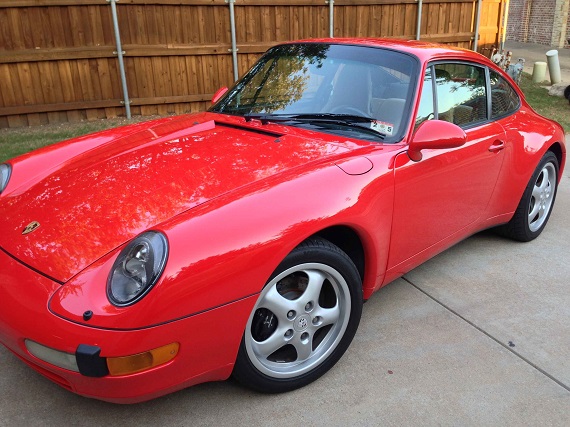
2 CommentsIt never fails: I spend a decent bit of time going through older variants of the 911 and then come across a basic 993 and am blown away by just how good it looks. You would think by now that would stop happening, but it’s a testament to the design that I’m still so enthralled by the look of these 911s. The shape is a perfect evolution of the original design and while Porsche would introduce with the 996 the more raked windshield that we still see today, I really like the balance of the design with the higher overall body line. It’s certainly not as aerodynamic, but to me it looks better and that’s part of the joy. This particular 993 comes from near the beginning of the model run: a Guards Red 1995 Porsche 911 Carrera Coupe, located in Dallas, TX, with 71,101 miles and on auction with no reserve.
CLICK FOR DETAILS: 1995 Porsche 911 Carrera Coupe on eBay
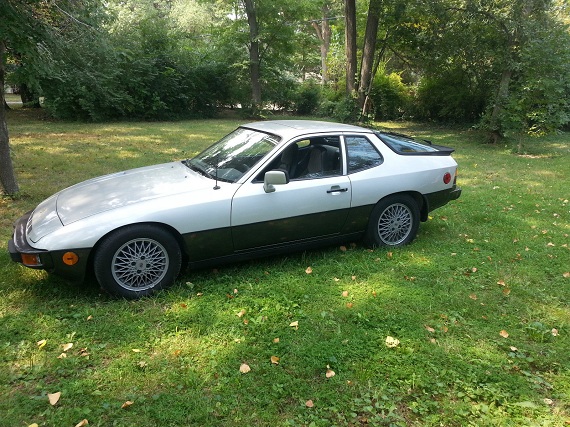
3 CommentsTwo events transpired yesterday that, for me, relate to this car. First, I was watching some of the Mecum auction action, and a low mile Porsche 993 Turbo in Arena Red came across the block. I watch in semi-horror as this modern Porsche crested $170,000 quickly. Now, I’m sure to someone that car is worth $170,000 – and speculation will probably continue to drive prices on the last of the air-cooled cars higher – but to me, that market is just absolutely insane and in need of a serious correction. The second event was that I took my very much not-perfect, not low mile and fairly compromised Audi for a drive down the road. The suspension is set to punish, the heat is stuck on, there’s no radio, and it smells vaguely of mold; I smiled all the way. Do you need a perfect car to just enjoy a drive? No, I don’t think you do. Would I have felt better if my car was an absolute pristine 100 point Sport Quattro? No, I think I’d be afraid to drive it, honestly. That’s what makes second-tier cars so appealing. The values aren’t high enough that you’re afraid to purchase or drive them, but they’re still special enough to give you a smile when you take them out. Driving down the road, not many people know what my Audi GT is anymore, and I’m okay with that. I imagine the same feeling occurs for Porsche 924 Turbo owners: