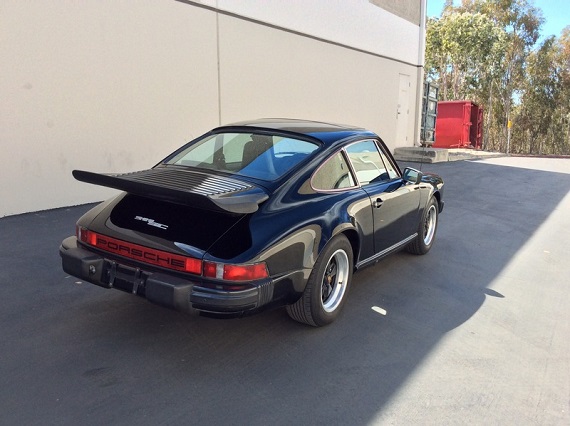
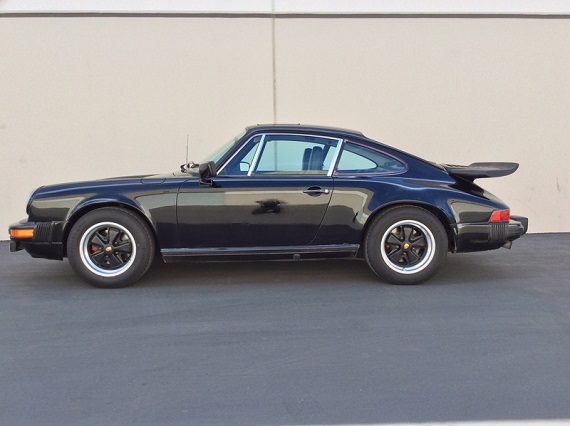
Yesterday we took a look at a 1989 MY 3.2 Carrera, the last of the classic 911s, and today we will turn the clock back a little bit further to take a look at the first year of the 911SC. As discussed in yesterday’s post, 1978 and 1989 bookend an important period for the 911 and Porsche in general and, just as importantly for our purposes here, all of the cars from this period remain in high demand though also can be found for decent value. That value becomes especially noticeable when looking at the 911SC. The SC came along following a slightly rough patch for the 911 as the mid-year cars, which had followed upon the very well regarded 2.4 liter long-hood models (as well as the legendary Carrera RS), appeared to be a significant step backward for the marque. Hampered by restrictive emissions equipment dulling engine power and fitted with impact bumpers that took some time to adapt to, the mid-year 911 has struggled to capture the hearts of Porsche fans for quite a while now. There are always exceptions, of course, and the cars did get better as we moved toward 1978 and the release of the 911SC, but that release still marked a turning point and escape from the wilderness. Fitted with a near bullet proof 3.0 liter flat-six the SC now brought the 911’s performance and reliability back to where enthusiasts expected it and the gradual evolution of the design had begun to win over more and more fans. Here we have a nice first-year example: a Black 1978 Porsche 911SC Coupe, located in California, with 103,900 miles on it.
German Cars For Sale Blog Posts
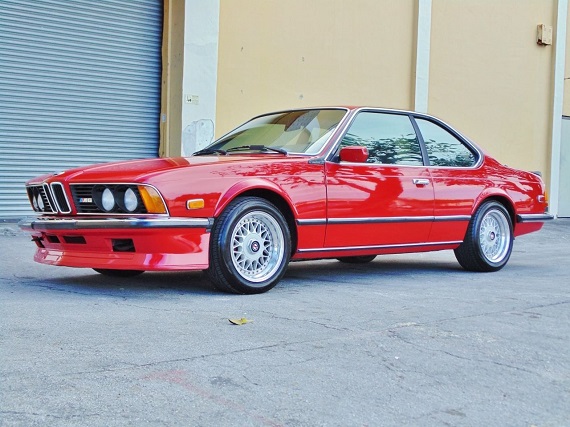
An odd reversal has occurred in the BMW world; go back even five years and the car from the 1980s – outside of the M1 – was the M6. Now, oddly, the M6 may be the best value going in Motorsport BMWs from the 1980s. What caused the turn around? Well, it certainly had little to do with the M6, and probably more to do with the inevitable acknowledgement that the more rare M5 was a great car too, and the E30 has equally gained status as – effectively – a 911 replacement. So the M6, the grandest of BMW’s grand touring lineup, has become relatively affordable for the performance level offered. The extra benefit of it’s high residual price has been that most have been kept in excellent condition overall; while it’s normal to see highly modified or ratty M3s and M5s, finding pristine M6s almost seems cliche; odd, considering the relatively low number produced. Even more affordable than the later M6s was the M6 prototype; the M635CSi. While never imported to the U.S., a fair amount made it here through the grey market long before the M products debuted in this market. With an even more potent version of the inline-6, the M1-detuned M88/3, coupled with lower weight, these early M6s were even more impressive performers than the later cars. However, unlike the later M6s, finding clean and unmolested M635CSis is more difficult as lower residual value on the grey market cars meant they were sometimes neglected or more heavily modified:
CLICK FOR DETAILS: 1985 BMW M635CSi on eBay
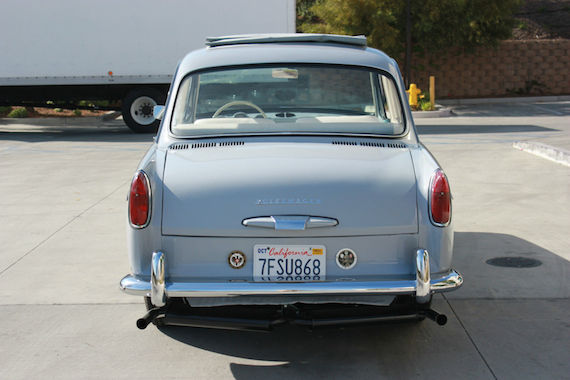
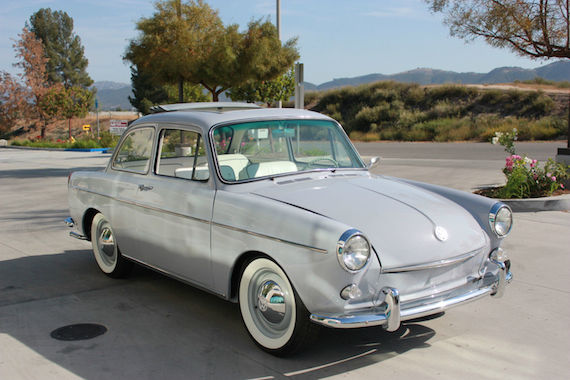
9 CommentsEvery time I see a Volkswagen Type 3 Notchback, I’m reminded just how good a basic three box design can look. The Notchback was never intended to be a flashy machine, nor overtly stylish like its Karmann Ghia siblings. Mainly, it was meant to expand the Volkswagen lineup, providing customers with something a little bit larger than the Beetle for those seeking more space. This car had a grace all its own, however. We’ve seen a few modified Notchbacks pass through GCFSB over the last year or so, but this example for sale in California has been kept pretty true to the original formula, having undergone a recent restoration.
CLICK FOR DETAILS: 1963 Volkswagen Type 3 on eBay
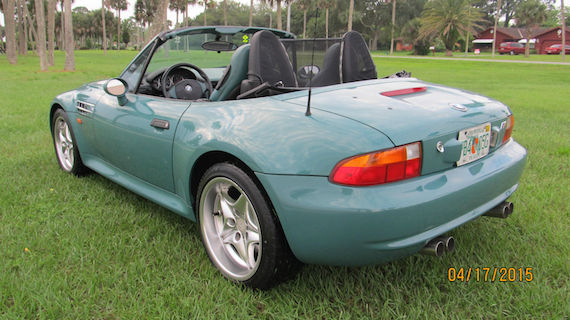
Comments closedWhen it was introduced, the BMW M Roadster quickly caught the attention of those who thought the non-Motorsport variety Z3 Roadster was a bit weak in the knees. Even though the US version was initially short on horsepower versus its Euro market counterpart, 240 horsepower was nothing to sneeze at in such a small package. Then the M Coupe arrived on the scene. Still a two-seater, this sports car with a breadvan profile was a bit misunderstood at first. Now, however, it’s popularity is eclipsing that of the M Roadster, leaving prices for the open roofed version lagging a bit. This M Roadster for sale in Florida is a lower mileage example, wearing the rare Evergreen hue that at times polarizes opinions.
CLICK FOR DETAILS: 1998 BMW M Roadster on eBay
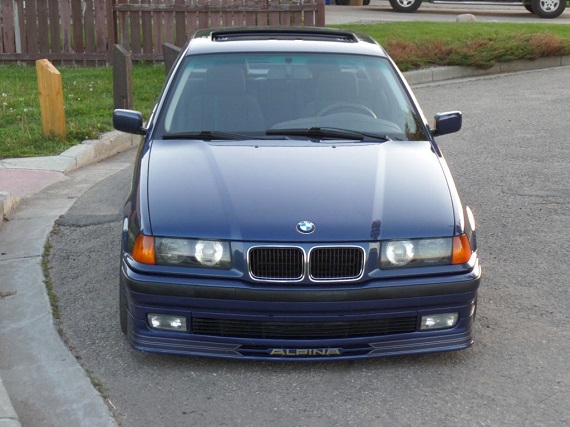
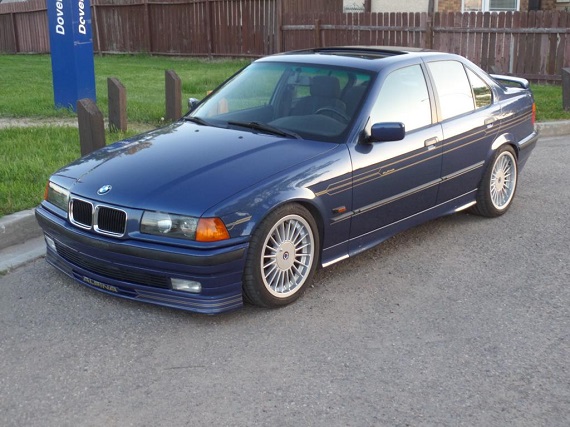
1 CommentWhile Ruf and AMG grab most of the big tuner headlines from Germany, Alpina quietly and competently produced some of the wildest and best executed BMWs ever made. Simply put, Alpina made already good BMWs better – and arguably still do today. One of the most interesting aspects of the company is the close working relationship they have with the factory; a partnership which results in truly special treatment. Take the Alpina B8 for example; any normal tuner might have simply enlarged the inline-6 under the hood of the already potent M3. Or, in the tradition of the 1980s Alpinas, they could have turbocharged the engine. But instead Alpina asked BMW to make them a special V8. And, somewhat surprisingly, BMW did – a new block was designed for Alpina since the normal 4.0 couldn’t be bored out. The result was a 4.6 liter motor which was fit to the B8 4.6 and B10 as well. The motor was so large in the E36 that a special oil pan had to be designed, and neatly a German camera maker had to be employed to design and build a special oil pump to run it. Yet in true Alpina tradition, the fit and finish was factory and accompanied a host of suspension, interior and aerodynamic tweaks. Capped off by special Alpina paint, these B8s are truly special E36s. While the B8 4.6 is the headline grabber, Alpina built a short run of 5…or perhaps 6….4 liter models that were sold in Japan: