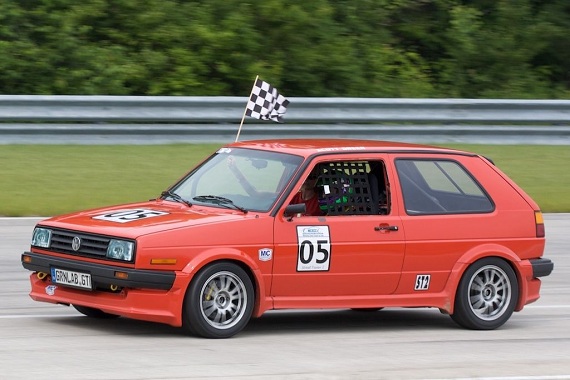
There’s a saying that goes something along the lines of “To make a small fortune in racing, you have to start with a large one”. While it’s true that any track-related activities are generally a one-way flow of cash – out – from your bank account, it doesn’t necessarily mean that you need to be a millionaire to go have a lot of fun. One of the more affordable platforms that budget weekend racers took to in the early 1980s was the then-new Volkswagen GTi; with solid aftermarket support, a light and nimble chassis and and crash it, walk away ability, the inexpensive Volkswagen was a natural track candidate. It’s become rare to see either of the first two generations showing up at the track these days, no surprise as many are 30 years old at this point. But once in a while, one that has undergone development and is a tidy package pops up, and today’s 1985 GTi is just one such example:
German Cars For Sale Blog Posts
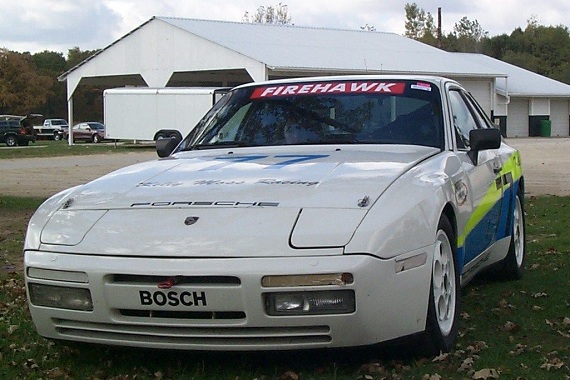
In a recent discussion regarding why values of the E30 M3 had taken off while the Porsche 924/944/968 had remained affordable, one of the comments suggested that the reason was because the Porsches did not enjoy the race pedigree than the M3 did. While one can’t deny the success of the E30 M3 on track and even in rally venues, that answer belies the many races and different series that the 924 and 944 competed in. Indeed, the development of the 944 and 944 Turbo motors came about in part because specifically of the race programs. In everything from local SCCA races straight up to the big dogs at Le Mans, the Porsches were racing right beside some of their more famous 911, 935, 936, 956 and 962 brethren. On top of that, the factory also fronted 924 Carrera GTS cars in the World Rally Championship, many of those that were involved later to move to Audi’s program. Then there were the one-make 944 and 944 Turbo Cup races around the world. But into the late 1980s and early 1990s, one of the hottest contested, affordable race series in the U.S. was the “Firehawk” series put on by IMSA and the SCCA. One of the more competitive cars in those race series were the late 944S2 and 968 models, offering serious reliability, surprising speed and excellent balance to make a fantastic race car. One of the original 944S2 Firehawk cars is up for sale today:
CLICK FOR DETAILS: 1990 Porsche 944S2 Firehawk on eBay
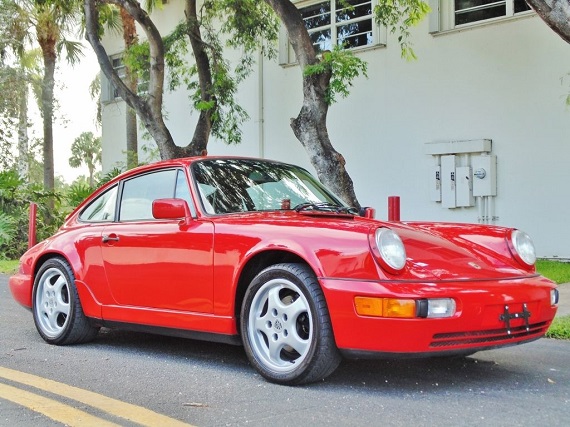
Comments closedWhen Porsche introduced the 964 to the world they did something a little peculiar. The first model they released was the all-wheel-drive Carrera 4. To inaugurate a new model itself was a big step given the substantial revisions to what was quickly becoming a performance icon. To do so with the release of a model that previously never existed? That was huge. The Carrera 2 would come a year later, but the release of the Carrera 4 began the march towards what we might call a more “grown-up” Porsche. With power now driving all 4 wheels, in addition to an electronically-raised rear spoiler, the difficulties many drivers may have had mastering the 911’s dynamics now became simplified. A few years later we would also see an all-wheel-drive 911 Turbo and ever since these models have been a constant presence in the 911 line. So here we have an example of the model that started it all: a Guards Red 1989 Porsche 911 Carrera 4 Coupe, located in Miami, with 86,000 miles on it.
CLICK FOR DETAILS: 1989 Porsche 911 Carrera 4 Coupe on eBay
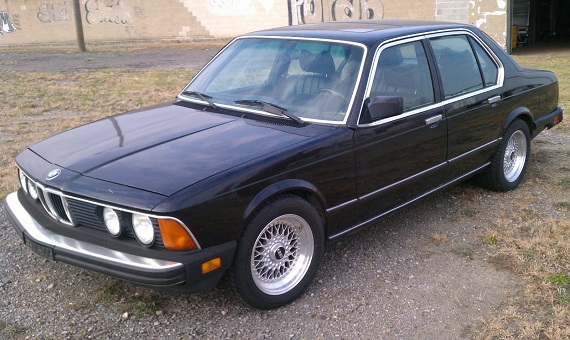
Comments closedThe E23 has always been a design which to me has been quite polarizing. As with the E12 and E24, Paul Bracq was heavily involved in the final design and it shows – in many ways, the E23 looks like a cross between the two that was scaled up 10%. The results of that in my mind weren’t always good. Growing up, my father had both E24s and E28s, clean looking, well proportioned designs, and when I first saw an E23 I remember thinking it looked a bit ungainly. In U.S. specification, the bumpers were too big and the wheels were too small, resulting in a car which appeared heavy, sagging and sad. When he’s really upset, my son manages to invert his lip and stick it out, tears streaming down his cheeks. It’s a look which nearly mimics the U.S. spec front end of the E23 I now recognize. However, in European trim the E23 made more sense – it looked lighter, smaller and better proportioned. While not as stately as the W116, it certainly looked a fair bit sportier outside and more modern. Couple those European-market looks with some great period BBS RS wheels and the look is just about perfect; throw in the turbocharged M106 motor and you’ve peeked much interest. Of course, unfortunately the M106 was only pared with an automatic transmission – but then, what would happen if you swapped that for a 5-speed?
CLICK FOR DETAILS: 1984 BMW 745i on eBay
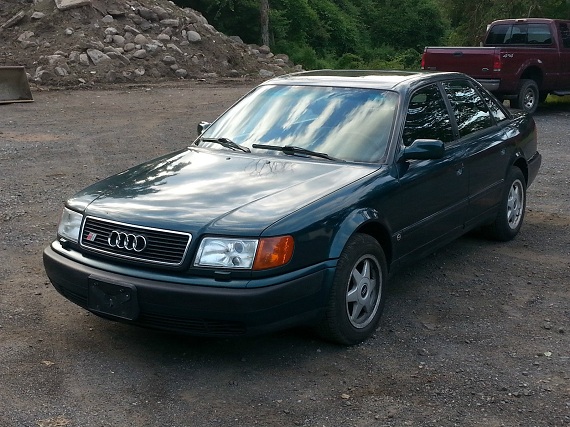
3 CommentsI find options on cars very interesting, especially when they’re options that aren’t often selected. Every once and a while, I’ll sit down and build a car on Audi, BMW or Volkswagen’s configuration tool, all the while trying to figure out what will be the options that 20 years from now someone will pine after, or just even smile to see. Today’s S4 is a great example of just that; indeed, if you look at the window sticker, you’ll note that only two options were selected. One was the 10 Compact Disc trunk mounted changer; it was an option my 1993 V8 quattro had and in retrospect I can’t believe they got away with charging $800 for it – I’m reminded of the scene from The Wedding Singer. But that’s not the option I’m really interested in; no, what I find unique about this car is that it was specified to the no charge 15×7.5 Speedline-made option wheels with all-season tires. For a time, Audi even touted that its 15″ option wheels offered better ride quality than the competition’s huge 16″ rolling gear. It was a rarely selected option, and it’s even more rare to find the car still rolling on those wheels 21 years later: