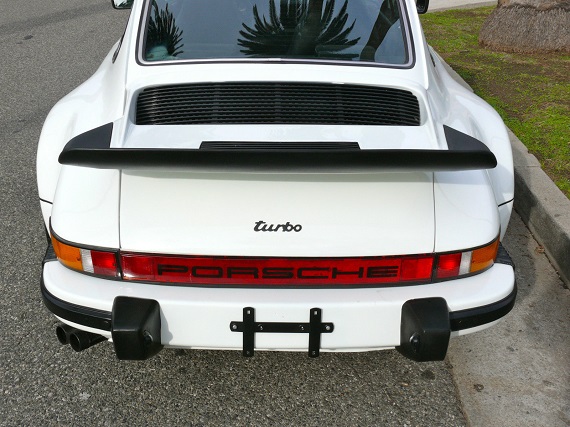
An early Porsche 930 is a truly special vehicle, not just for its sheer performance but for its development and ultimate showcase of what Porsche was capable of producing. While initially intended to follow in the footsteps of the Carrera RS as a lightened 911 designed to meet homologation requirements, plans for the 930 shifted as those requirements changed and the car became an opportunity for Porsche to produce a car that melded a high degree luxury with blistering performance. Porsche could now compete with the likes of Ferrari. During the early years, from 1975-1977, the 930 changed little featuring a turbocharged 3.0 flat-six mated to a 4-speed manual transmission. The greatest change then came in 1978 when displacement was increased to 3.3 liters and an intercooler was integrated into the redesigned spoiler. My preference, purely from an aesthetic point of view, has always been for the 3.0 liter cars for the simple reason that the whale tail fits the lines of the car almost perfectly, while the tea-tray of the 3.3 liter cars looks slightly clunky. It’s a minor difference, but one that always stands out to me. The example here comes from that early 3.0 liter period: a rare sunroof delete, European, Grand Prix White 1977 Porsche 930, located in Los Angeles, with 21,787 miles on it.
Tag: Porsche
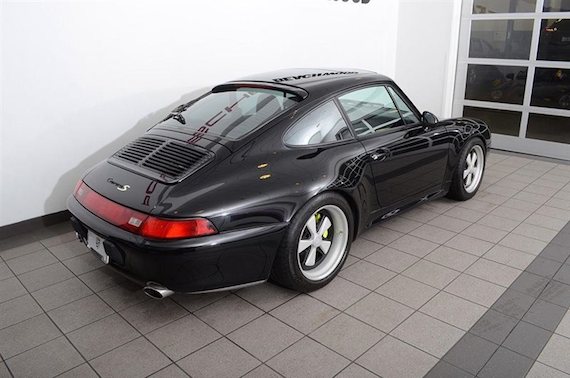
There’s something about a widebody 911 that gets my heart racing. The 993 Carrera S and 4S captured this look perfectly, with it’s smoother styling that would usher in the final chapter of the air-cooled 911. The Carrera S and 4S was an attempt, as in previous generations, to capture a bit of the aggression of the 911 Turbo without the cost or complexity. Other than the rear wing and twin-turbocharged engine, the S models were quite similar to the Turbo, sharing the wider rear haunches that would ultimately increase aerodynamic drag. This Carrera 2S for sale in Ohio has been tuned up a bit, looking quite mean in black sitting on replica Fuchs alloys.
Click for details: 1998 Porsche 911 Carrera 2S on eBay
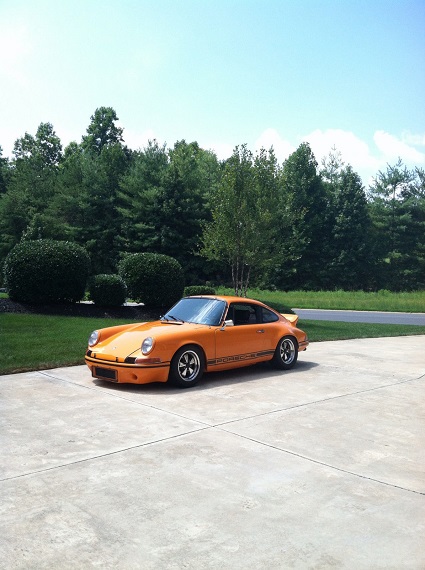
7 CommentsA rather sad thing is happening within the Porsche world; the 911 is increasing in value so rapidly that its original dual purpose nature is being threatened. The 911 was, for some time, one of the few cars that really was effectively track-ready right out of the box. While it’s seldom been the all-out fastest circuit car available the 911 has been the dependable choice; lightweight with enough power to thrill you and enough idiosyncrasies to challenge you as a driver. Today I’ve rounded up two track-ready examples that still can be street driven; both 3.0s but with different yet classic interpretations of the 911 design, which is the winner?
CLICK FOR DETAILS: 1972 Porsche 911T on eBay
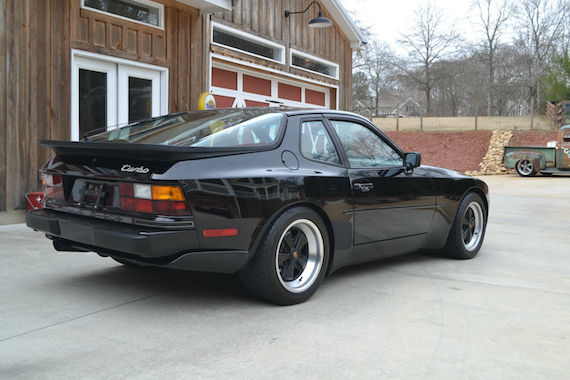
1 CommentIt seems hard to believe that cars from the eighties are considered classics these days. Time flies, as it seems like yesterday that I remember seeing cars like the Porsche 944 Turbo and BMW E24 M6 sitting on the showroom floor, brand new. For a while, these two-door towers of power could be had for a mere fraction of what they cost new. However, collectors are becoming hip to the scene, recognizing these vehicles for their outstanding abilities. First up, we’ll take a look at this 944 Turbo for sale in Georgia with under 60,000 miles on the odometer.
Click for details: 1986 Porsche 944 Turbo on eBay
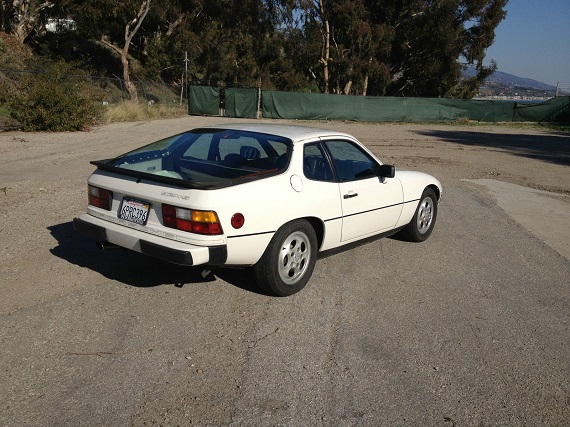
6 CommentsI have to admit, when I heard that my father had finally bought a Porsche after years of contemplation, stopping by dealerships, test drives and dreams I was hugely excited. However, those dreams were dashed on the rocks of reality when the tatty Zermatt Silver 1987 924S pulled up. At that time, I didn’t really know what the 924S was – other than that it was clearly not a 911 or 928. It didn’t even really look like a 944, though there were several obvious similarities. I had a hard time wrapping my head around it, and I was brought back to when I was a much younger lad and my father’s friend invited us over to go for a ride in his then-nearly new 1982 924. Although the wheels were larger on my father’s example, it seemed that there was little different. I was further disappointed because this was my father’s new track car, replacing his 1988 M5 as the car of choice to head to the circuits. That seemed especially odd, and admittedly I didn’t get it until I got to drive the car on track a few years later. Those know Lime Rock Park before the repave will recall that at the bottom of “The Downhill” there was a compression mid-corner that if you hit wrong would result in some unexpected and unwanted turning. I found myself there at full throttle, 90 m.p.h. in the 924S; hitting the compression, the car was instantly pitched sideways to the point that I was looking down the straight through the driver’s side window frame. While I’d like to say that it was my supreme driving ability that pulled us out, I think the reality is that the 924S proved what made it a great driving car in that instance – a quick correction on the wheel, no lift and with little drama we continued down the straight. I finally got it – this car was all about driving: