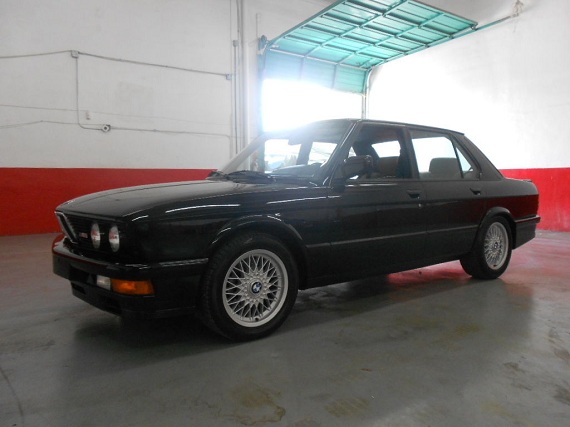
When it comes to fan favorites, few cars tick the right boxes like the original M5. It has a mystique about it that really sets it apart from even its M siblings, as if it were somehow made from a different mold than the M3 and M6. Coupling a great shape, excellent driving characteristics and one of the most dynamic inline-6s ever made, the M5 was the stuff of legend right from launch. That’s why it’s particularly puzzling that it has not gained the star power of the M3 or M6; true, the M3 had a much more substantial racing history – but it’s quite hard to say that it would put a bigger smile on your face than the M5 would. Every one-ramp and exit ramp becomes an opportunity to get that rear end to step out just a bit; it’s so easy to catch, it almost feels like it was designed to drive at a 10% slip angle. I remember the first time I climbed behind the wheel of my father’s M5 – I felt like I was on top of the world. There was a ferocity to the way the needle climbed the tachometer coupled with a raw scream from the S38 that few cars I’ve driven since have been able to match – it was worthy of instant goosebumps. I’ve driven faster cars – much faster cars – but the M5 feels special in ways they just don’t:
Category: BMW
If I’m honest, I’m not a huge fan of the entire E30 scene. I think it’s a bit overplayed, over-hyped and over-priced. Granted, they’re nice cars, but even though they’re slower I’d take a clean 4000 Quattro or Coupe GT over a 325i any day. There are two exceptions, though; the E30 M3 is of course a favorite of mine but firmly out of reach in any meaningful condition. The other exception is the Touring model – I’d love it if Audi had made a B2 quattro Avant, but they didn’t. Sure, there’s the Quantum Syncro wagon, but park one next to this 1988 325i Touring and for me the clear winner in looks is the BMW. In fact, it’s so much better looking to me than a Quantum, even the steering wheel on the “right” side wouldn’t bother me:
CLICK FOR DETAILS: 1988 BMW 325i Touring on eBay
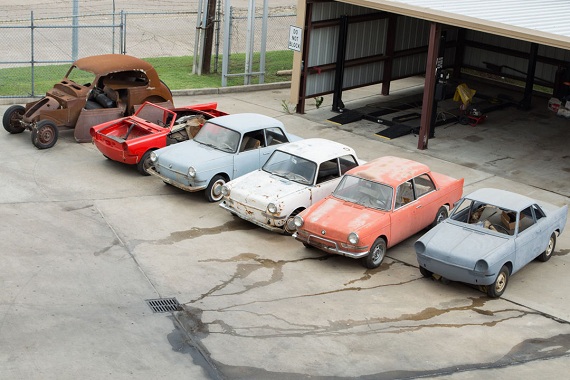
5 CommentsWhen considering a restoration project, many things factor into one’s decision. You need to first pick a model that you find particularly interesting or intriguing. For me, that includes choosing something a little outside the mainstream interests. It’s why I prefer the Audi V8 to the S4/S6, for example. It helps if it’s something that you can afford, as well – for example, you could decide to restore a very early 356 Porsche rather than a 911, but if you can’t afford to buy one it’s no good. Then you need to weigh parts availability and cost along with your restoration goals; will this be a driver, a survivor or a 100 point show car? The costs vary for each, as will the amount of detail work involved. For me, while I love to see pristine 100 point show cars, I prefer something that can be driven to the show and home. My Audi, for example, is certainly not pristine – but it also doubles as a track car, and with nearly a quarter million miles on the clock I’m proud of some of its battle scars even if they make me sigh from time to time. So, when something very unique pops up that has potential to be different, special and really stand out from the crowd, I take notice. The 2002ti turbo from Monday is a perfect example of this; a car that needs a tremendous amount of restoration but it really different than everything else out there. In that vein, here’s a collection of the rare, rear-engined BMW 700s in various configurations and states along with a WW2-era 321 chassis. Why limit yourself to only one project when you could have six?
CLICK FOR DETAILS: BMW 700 Collection on eBay
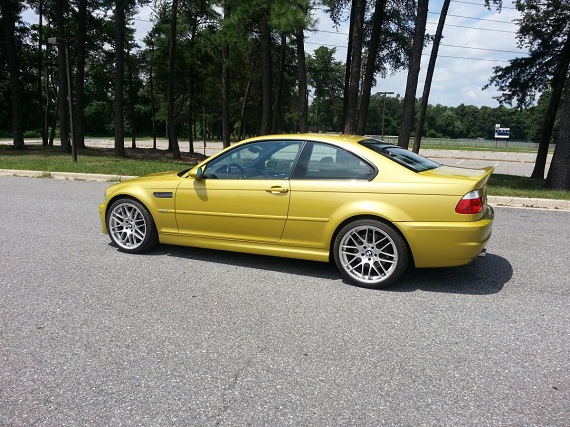
3 CommentsFor some time I’ve talked about how I’d really like to get an E46 M3. I still remember well when the M3 launched; it felt as if a giant weight had been lifted from the collective shoulders of those who complained that the E36 was too watered down for the American market. Under the hood lurked the high-revving S54 3.2 inline-6, replete with individual throttle bodies. It was a return to form for BMW M, who managed to squeeze over 330 horsepower from that engine. In the world of racing cars, before 2000 it was considered to be quite good if you could make 100 horsepower from a normally aspirated liter; but Honda and BMW both left countless engine builders shaking their heads in disbelief as they were able to best that feat while retaining day to day drive-ability, longevity and a warranty. Outside, BMW stepped up the game to make the M3 stand out a bit more than the E36 had. Like its predecessor, the E46 had revised and deeper front and rear bumper covers, but the M3 added some venting behind the front wheels and some quite sexy rear flares and wide tires, along with four exhaust pipes. It was as if someone had taken the better styling ques from the M roadster and M3 and combined them. Then, there were the colors – Laguna Seca Blue has proven to be a fan favorite, but I always loved Dakar Yellow. So, I was quite excited to get a poster when new of the color that personified the rebirth of the M3 – named Phoenix Yellow – with the tag line “Okay, a Ph.D is pretty impressive, too”: